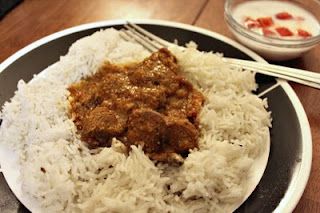
I'll be the first to admit that lamb can be a bit intimidating in the kitchen. I think the main reason for this is that it's pricey and well, you don't want to screw it up. I also think a lot of people think all lamb recipes are something extravagent when, in reality it's just like any other piece of meat. We get our lamb for free and we really have no reason why we aren't eating lamb at least 3x's a week. We've made a conscience effort to be better about this and have been trying new recipes. I've shared our go-to lamb recipe from the American Lamb website with you before, but I wanted to share a new recipe we've found. This Lamb Roast recipe is from the Crocking Girls website, we added a few ingredients and made a few changes to the original recipe which I indicate below with asteriks and parenthesis.
Here it is!
1 leg of (Colorado) lamb* the CG recipe uses Lamb Roast Trim away excess fat*
Leg can be frozen*
1 teaspoon black pepper
1 teaspoon kosher salt
1 teaspoon fresh or dried rosemary
1 teaspoon garlic powder or 3-4 garlic cloves*
Mix spices together and rub vigorously on leg of lamb.
Place lamb in crock pot (yep, I said crock pot!) and add:
1 teaspoon Lime Juice* 1 Tablespoon Lemon Juice 1/2 cup of water
Cook on low for 8 hours.
This is a delicious and easy meal! We were a little nervous to cook lamb for 8 hours, seems a bit long, but it was mouthwatering.
I hope you'll give this a try! If you do, let me know what you think.
I read a story in Range Magazine that made me feel all warm and fuzzy inside. I had to learn more so that's when I went to Mr. Google.com.
The story is about a Marine. A Marine that sacrificed it's life time and time again for fellow Marine brothers. This Marine is best known for the heroic hours during the Battle of Outpost Vegas in March of 1953 that lasted five days.
Now, I will be the first to say that every Marine in my book is a hero, but this Marine stands out amongst the rest because during the Battle of Outpost Vegas the Marine made 51 trips from the Ammunition Supply Point to the firing sites carrying ammunition for it's brothers. These trips to and from required this Marine to walk over 35 miles across open fields, up steep mountains all the while ignoring the sound of enemy fire coming in at the rate of 500 rounds per minute.
This Marine also carried wounded soldiers to safety, shielded fellow Marines from enemy fire and took two gun wounds, but kept going.
Recipient of two Purple Hearts, Good Conduct Medal, Presidential Unit Citation with
star, National Defense Service Medal, Korean Service Medal, United
Nations Service Medal, and Republic of Korea Presidential Unit Citation.
Baxter Black is a Cowboy, a poet, a comedian and one clever dude.
No, I don't know him personally, but I love everything he has to say!
For those of you to whom the word "sheep camp" conjures up a
pastoral, nostalgic, even romantic vision of shepherds watching
over their flocks by night, I suspect you've never spent a night in
one!
Sheep camp, in the real world of shepherding, is the wagon where
you sleep, live and eat. It looks like a small covered wagon, a
round top on a box. There is a built-in-bed with storage
underneath. There is a small stove-heater propane unit and a
drop-down kitchen cabinet behind. A lantern provides light. The
roof could be canvas or sometimes fitted tin. The wagon has four
tires and a tongue and is usually hauled or pulled to the grazing
area.
In its heyday, the mid-1900s, sheep camps were as common and handy
as Airstream motor homes. It was the best years for the sheep
business.
I worked in the ION country (southern Idaho, western Oregon,
northern Nevada) in the '70s near the end of good times for sheep
business. I worked for an outfit that ran 20,000 sheep on the high
desert sagebrush. In the summer, the herd would be divided into
bands of 2,000-3,000.
One man with his sheep camp, dogs and a saddle mule or horse would
watch over his band. He would keep moving them to good forage and
try to protect them from predators. When it was needed, he would
hook up his horse and drag his camp to a new location.
The boss would drive with the supplies, including water, at least
once a week, maybe more. These were self-sufficient, hard-working
immigrants, often Basques from Spain. Over the years I watched the
Basque improve their lot and be replaced by South Americans. In
Wyoming, I have known of white American sheepherders, but that was
uncommon. Suffice it to say the kind of person who is fit to that
life and can do it well, has to be a no-frills kind of
person.
Fast-forward to the sheep business in the United States today. We
import our lamb from Australia, we no longer subsidize the
eco-friendly natural resource wool, and we have posted a mountain
of regulations protecting predators, wildlife, grazing land and the
New Zealand sheepherders.
Now this year the Department of Labor has taken it upon itself to
write an official sheepherder job description and other
requirements, with the object of restricting the hiring of "foreign
shepherds." These regulations assure that hiring foreign workers
won't deprive any of the 14 million unemployed able-bodied
Americans, of a job.
My question is, what able-bodied, evicted, food-stamped,
credit-revoked, receiving-government-checks American standing in
the unemployment line today, is going to apply for an outdoor job
on Blizzard Mountain, Idaho, where you are on call 24 hours a day,
knows how to bed down 1,800 sheep, can identify Halogeton, and
castrate lambs with his (or her) teeth?
Maybe before we pile any more regulations on the overburdened
handful of sheepmen left, the Secretary of Labor should spend a
night on Blizzard Mountain in a sheep camp with a box of matches, a
roll of Downy and a shaker of louse powder. I think she would be
assured there is no real danger of foreign workers depriving our
"nanny state" privileged citizens of proper employment.
Besides any Americans that would make good sheepherders are already
at work on the Great Northern Gas Fields, Iraqi pipelines and
Afghanistan security patrols. Like I said, it takes a no-frills
kind of person. - Baxter Black
Juan Villalba is working on changing how sheep and sheep ranchers deal with sickness on their ranches in a very interesting way.
Drug- resistant parasites are a growing concern for the livestock industry. You can only imagine the detriment an untreatable illness can do to a flock.
Studies have shown that there are a number of livestock parasites that are becoming resistant to medication. These parasites are responsible for ailing and killing animals including sheep and goats. It doesn't take a genius to know that this can have a huge effect on our food supply, let alone many ranchers' livelivhoods.
Villalba is experimenting with using pastures as a natural pharmacy. Yes, ou heard correctly! Farm animals will treat themselves by eating certain plants that contain medicinal compounds such as tannins, saponins and other natural compounds that can kill internal parasites. Crazy, right?
Villalba has sheep penned in a covered area that he calls "the cafeteria" and is teaching these sheep to associate eating these bitter tasting medicinal plants with feeling better. When the animals are placed in a pasture that contains medicinal plants, the sheep have been observed seeking out those plants when they don't feel well.
"By offering animals choices, we allow them to build their diet as a function of their own needs," he said. As the animals recover, they stop eating the medicinal plants.
Researchers see this as providing livestock with their own personal medicine cabinet. Villalba has about nine acres of test pasture where he grows a mix of medicinal plants and alfalfa. He is currently researching what combination of plants is best for sheep. Shared from Sheep Industry News
A small school district in Pennsylvania, lost $2 million in state support in 2011 after the state legislature made some of the largest education cuts in decades. One school within this district has taken it upon themselves to save money and has come up with a very unique way to cut their expenditures.
From a Yahoo article posted in August 2011 Carlisle's Wilson Middle School assistant principal has loaned seven of his sheep to help with the landscaping at his school. His sheep grazing the school's lawns will save approximately $15,000 on yearly mowing costs.
"There were some people who called the principals, they thought that someone was playing a prank," says the district's superintendent, John Friend.
The school district furthered their saving efforts by installing solar panels on the six-acre plot where the sheep graze.
We
have been so lucky to have our creeks running with water all
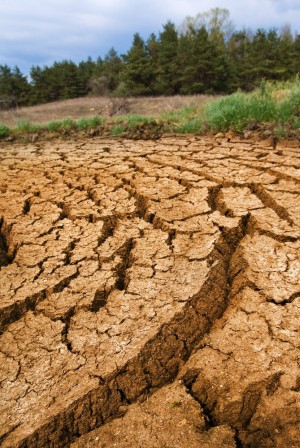
summer, but our neighbors have not been so lucky. There are twenty seven counties in Colorado that are on the Colorado Disaster Designation list.
The
U.S. Department of Agriculture has deemed these Colorado counties along with hundreds across the country worthy of assistance and
will help offset some of these ranchers and farmers’ losses due to the dry conditions.
The following is from a recent Farm Bureau article: 40 percent of the states faced abnormal dryness or drought. Hardest
hit is Texas, which is battling its third-worst drought in state
history.
Texas Agriculture Commissioner Todd Staples said more than 2
million acres of Texas farmland has been abandoned due to the drought.
People
are abandoning their land, selling their livestock and are calling
their 2011 farm crop a total loss. That just break my heart.
I can’t imagine.
I’ve learned that people do not ranch or farm for the
money, they ranch or farm because they truly love the lifestyle and
selling their livestock or losing their entire crop is heartbreaking.
This
is one of the many stresses I have learned comes with this lifestyle.
There will either always be too much rain or not
enough rain. There is either a good year or a bad year. There is no gray
area in ranching and farming and this is a tough thing to swallow.
I
thank God every day that we are on our way to having a good
year. I know this isn’t going to be a yearly guarantee and I know our situation could change tomorrow. I know there
will be years that we lose our shirts and I know how those in the disaster area could have so easily been us.
Today and every day I am counting our blessings. We have been so lucky.
What happens when the former CEO of International Dairy Queen has some extra time on his hands?
Why, he brings an old wool mill in Minnesota back to life!
The Faribault Woolen Mills, founded back in 1865, is said to be the oldest manufacturing company in Minnesota. Two years after going into debt and closing the doors, Chuck Mooty has decided to open this factory's doors once again.
At its height, this factory made wool blankets for Army cadets and employed 150+ workers. Chuck Mooty plans to employ approximately 50 workers and says the looms will begin spinning come August.
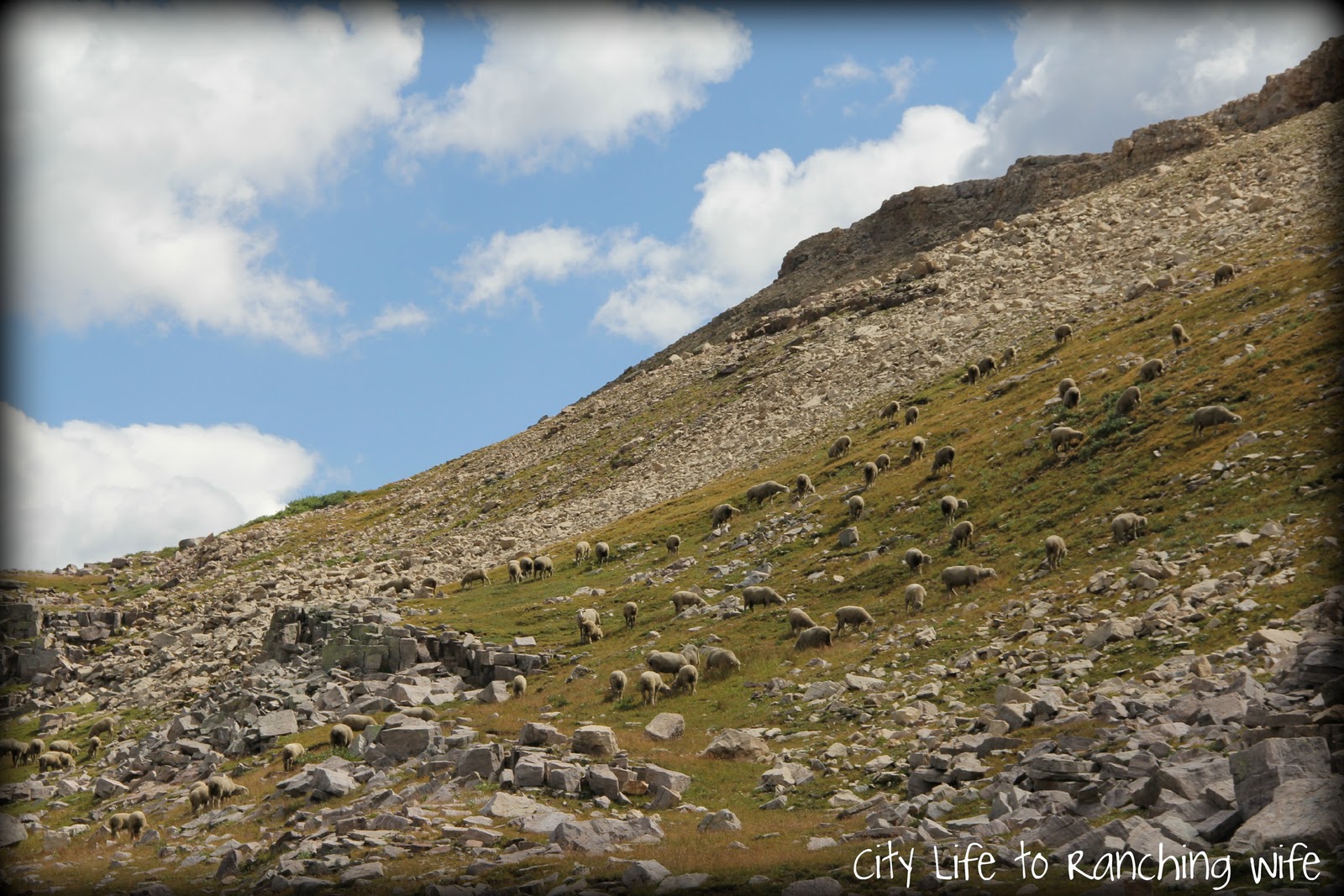
This is a letter released to the public. Funny that our sheep and dogs are one of the few 'bands' they are talking about. This letter gives great tips for hikers and backpackers that are headed up into the mountains this summer. I also thought it would give you a little more insight on what life for the dogs and sheep is like in the high country.
For immediate release: June 17, 2011
Visitors to public lands should be aware of livestock protection dogs in the high country.
As the snow melts in the high country, hikers, backpackers and
other visitors will soon be joining bands of domestic sheep in heading
for public lands. Domestic sheep are grazed on public lands under
permit from late June to early October. A band of sheep is often
accompanied by a pair of livestock protection dogs, which are an
effective tool used by ranchers to protect sheep from predators. These
large white guard dogs are often Great Pyrenees or Akbash breeds.
The U.S. Forest Service and Bureau of Land Management will be posting
signs along trails and trailheads notifying users of the dates that
domestic sheep bands will be grazing in certain areas. Follow these
safety tips when encountering guard dogs in the backcountry:
When approaching a band of sheep, allow time for the guard dogs to see
you and determine you are not a threat. Remain calm. If you do not
appear to be a threat, the dogs will often just watch you pass by.
If you have a dog with you, it may appear to guard dogs as a threat if
it gets too close to the band or tries to chase sheep. Keep your dog
close to you and under control. Leash your dog for as long as you can
see sheep band.
Try not to “split” the band by walking through it; instead travel around
the sheep via the least disruptive route. Keep as much space as
practical between you and the sheep band, especially if you have a dog
with you. As you pass, keep line of sight between you, your pets and
the guard dogs.
Bicycle riders should dismount from their bikes and walk past the band
with the bike between you and the livestock protection dog. Do not
remount until you are well past the sheep.
Do not:
* Chase or harass sheep or livestock protection dogs.
* Try to outrun livestock protection dogs. If a guard dog approaches
you, tell it to “go back to the sheep,” or tell it, “No!” in a firm
voice. Do not attempt to hit or throw things at it.
* Attempt to befriend or feed livestock protection dogs. They are
not pets. They are lean athletic working dogs, which are cared for by
their owners.
* Allow your pets to run towards or harass sheep. They may be
perceived as predators by the livestock protection dog and attacked.
* Mistake a livestock protection dog as lost and take it with you.
This Mutton Monday post is about Mutton! How about that?!
My mother-in-law and I went to a Native American festival a few weekends ago. It was the tribe's annual Bear Dance Festival and it spanned over a 4 day period.
We were feeling a little adventurous and decided to share a Roast Mutton sandwich since neither of us have had mutton before.
Mutton is the meat from an adult sheep with more than two
permanent incisors. This meat can be a bit tougher than lamb and hogget,
has stronger flavor and needs to be cooked at longer lengths of time to
reduce the toughness.
You can read more about the difference between lamb, hogget and mutton here.
I have to say we were both pleasantly surprised. We expected the mutton to be chewy and greasy, but it wasn't chewy, it was a little greasy. It was tender and tasted similar to lamb. The mutton was on a piece of fry bread with a slice of green chili. All in all it was good! Would I eat it again? Most definitely.
Lamb and wool are in high demand right now and this demand is expected to increase. This is good news for lamb and wool producers. Very good news. The question being asked is whether or not the United States can continue to meet this demand?
This year alone two US grocery stores, Super Wal-Mart and Kroger made a commitment to carry American Lamb in the near future. This is huge news considering most carry New Zealand lamb right now.
I'm happy to share with you that the U.S. military is the largest domestic consumer of wool. Pretty cool, eh?
I feel this is truly a step in the right direction. Wool and lamb producers want American lamb at the fingertips of consumers. What better place for this than at your local market? Availability is crucial for industry growth. This obviously goes for all products.
In reality, American anything filling up our grocery store shelves is a good thing, but I'm okay with baby steps. ;)
They've launched a campaign called twoPLUS. I won’t go into all the strategies released to help producers do this, but there are three main goals in mind.
1. Increase the size of your operation by two ewes per operation or by two ewes per 100 by 2014.
2. Increase the average birthrate per ewe to two lambs per year.
3. Increase the harvested lamb crop by 2 percent - from 108 percent to 110 percent.
I think the twoPLUS campaign is a great industry effort. Thanks ASI!
With that being said, next time you are at the grocery store and want to make something different for dinner pick up some lamb and try this recipe! Then come back here and tell me how much you loved it!
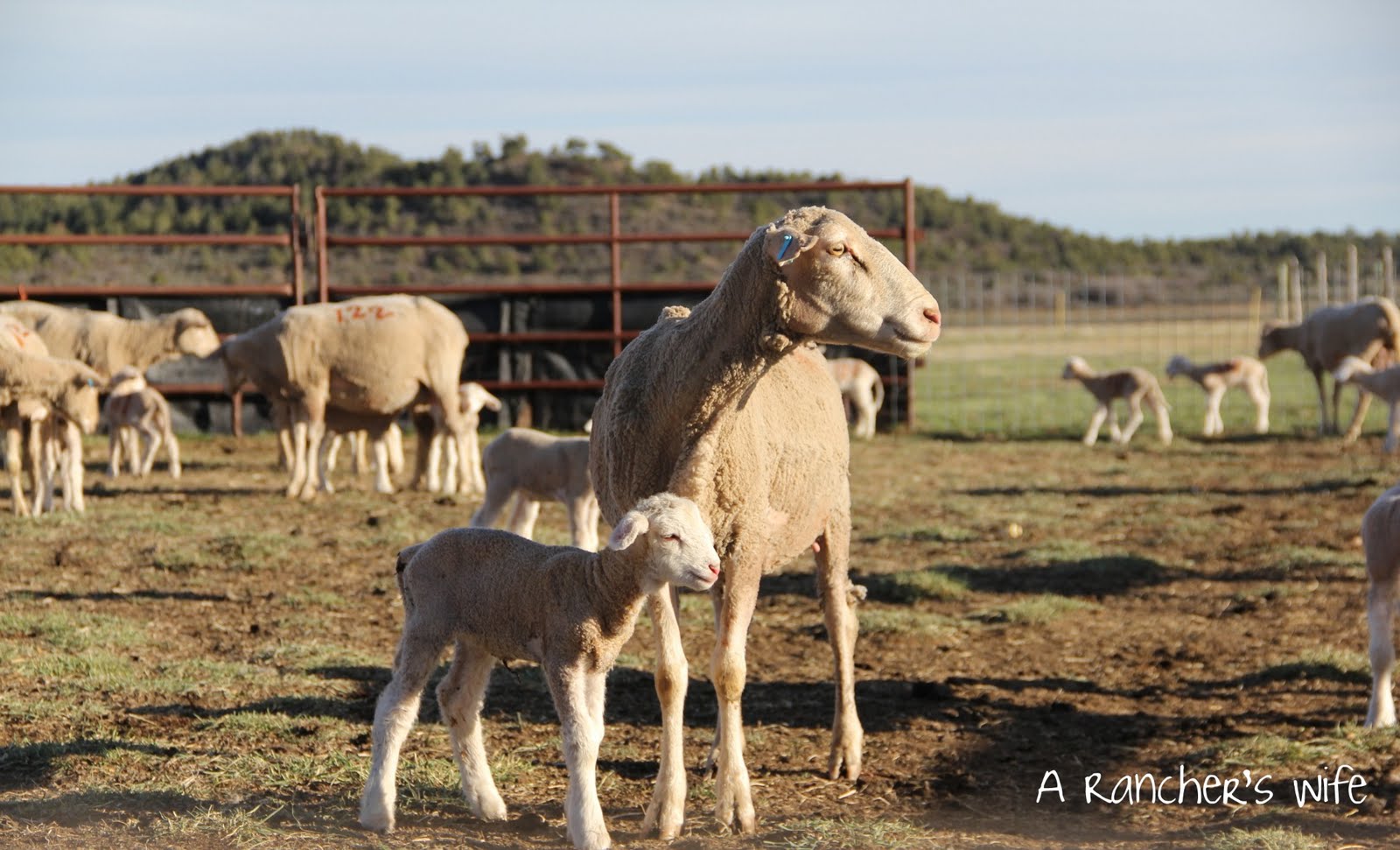
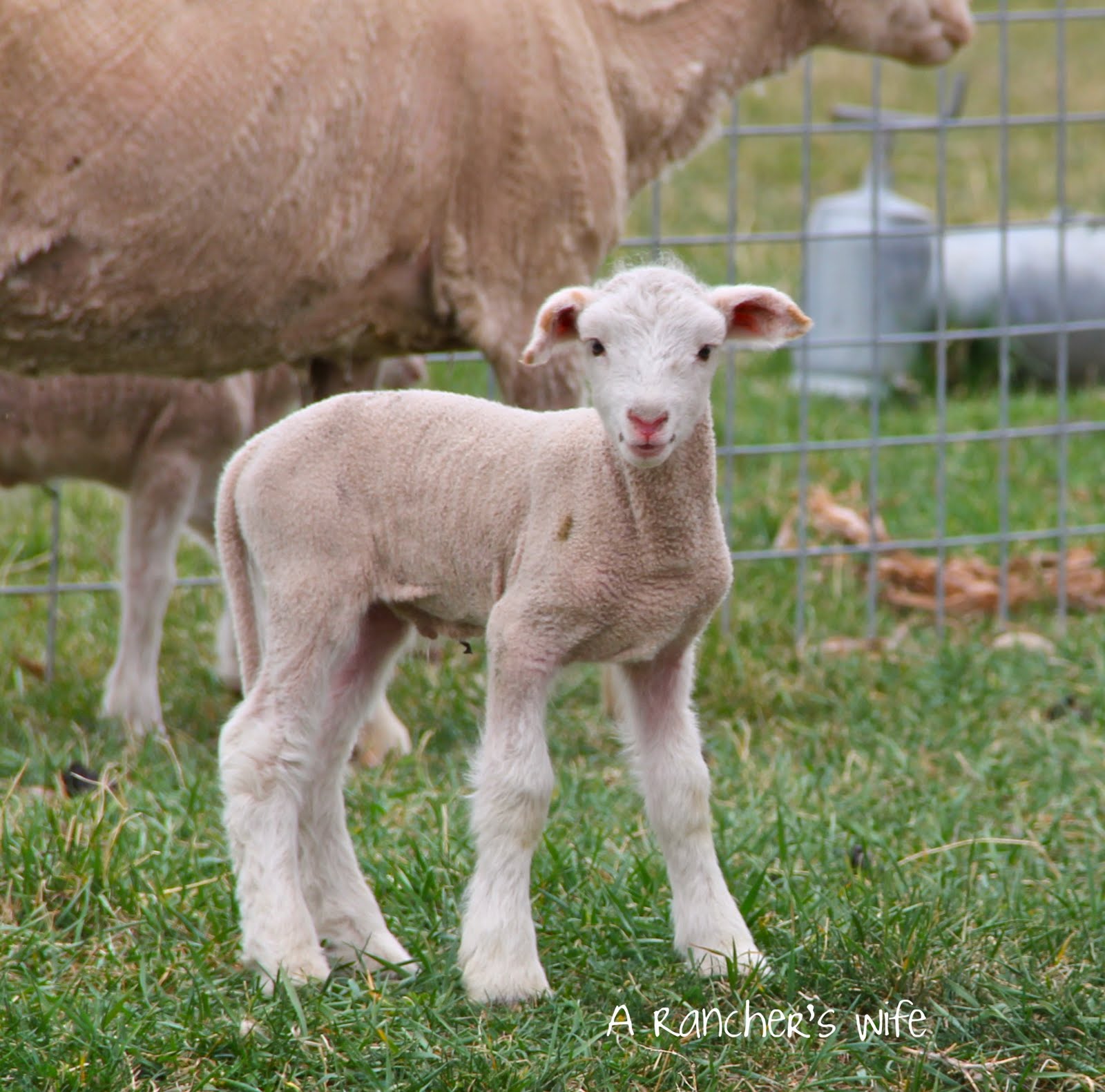
May is lambing time here at the ranch. This means a few things, one is that it's busy around here! As we speak J is out there working and it's decided to snow something crazy tonight! I hope those little lambies stay warm.
The last few weeks I've learned the babies we had a few months ago were just a drop in the bucket!
May is when the whole herd is due to have their babies. It began a few weeks ago on shearing day, but the past week has been the busiest by far.
Here is what lambing is all about.
First you have an open field of several hundred very pregnant ewes.
You have workers making their rounds all.day.long. They are looking for ewes that are showing signs of labor.
Don't you love Jigsy's new collar?
Here a few signs a ewe is getting ready to lamb:
1. She goes off by herself
2. Pawing at the ground
3. She passes her mucus plug
Once she starts puckering her lips like this - you know it's game time.
There are different phases in lambing. The first phase the ewe will dilate and lose her mucus plug.
Contractions will increase and the ewe's water bag will appear. This can go on anywhere from a few minutes to an hour. If a ewe is in
the pushing stage for over an hour it's likely she is having trouble. This is when one of our workers will intervene.
Most ewes will not need help lambing, a good sign they are fine on their own is if their lamb's hooves and nose appear simultaneously. This is the position the lamb should be in.
If you can see the nose and 2 front hooves mama can take it from there.
Once the lamb is born the ewe begins licking her baby clean. This is my favorite part. It's just amazing how instinct kicks in!
Once the babies are born and the ewes have a chance to bond with their baby, the lambs will picked up by one of the herders or J and the ewe will be lead to pen or "jug" as we like to call them.
You carry the lamb low so the mom can see and smell it. This does not hurt the lamb.
This is where they will bond some more and feed.
I've watched a quite a few births these past few months and I'll admit my eyes well up with tears each time. These animals are so strong and it's astonishing to see their instincts kick right in. Within seconds of a lamb being born, mama is right there licking her baby. These mamas can give these lambs so much more than a human can ever provide for them.
My hat goes off to all the mamas out there. Whether it's an animal birth or a human birth I know they don't call it "labor" for nothing!
Lambing is an amazing time of year and it's become my favorite time of year. This is what I get to see and hear every day.
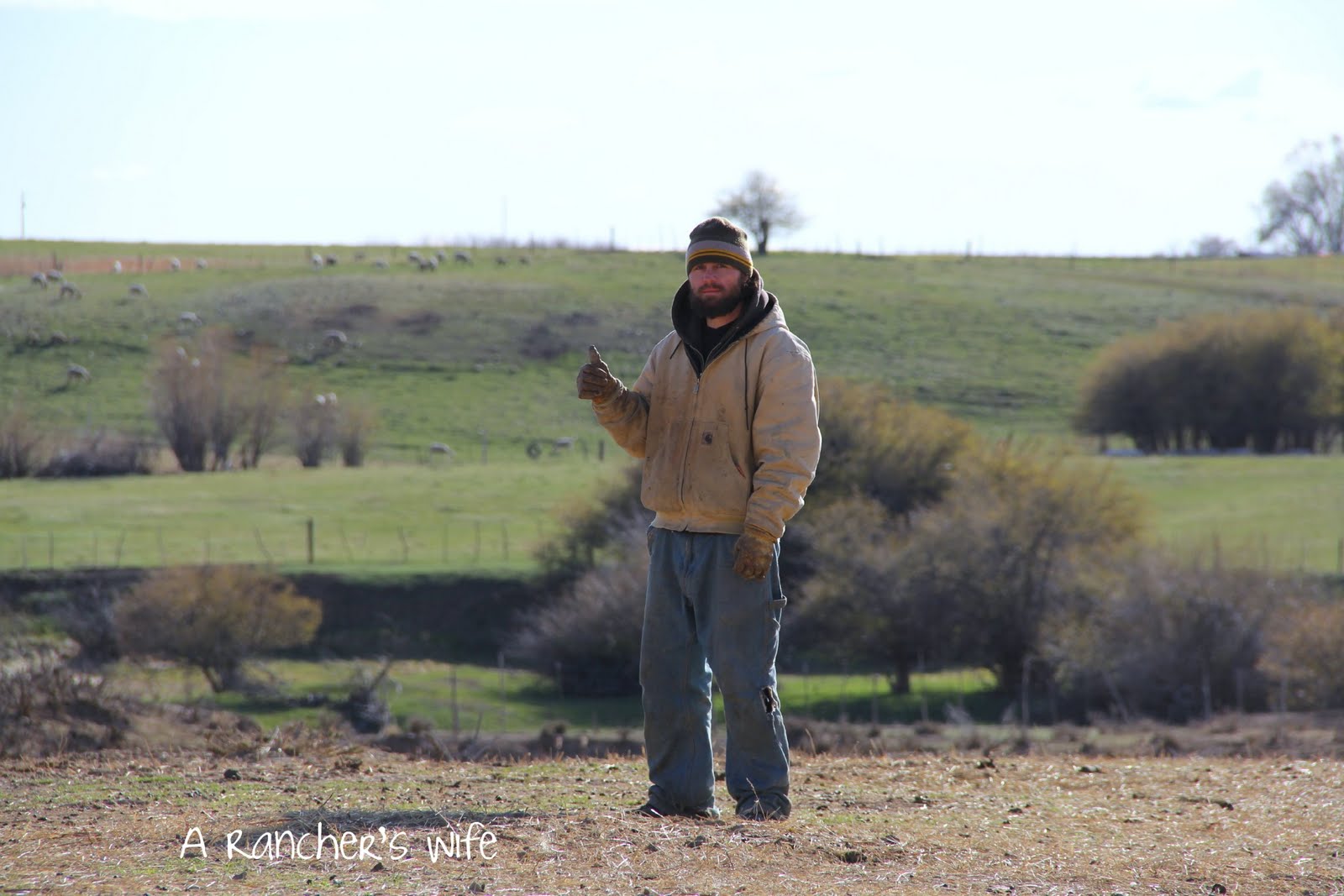
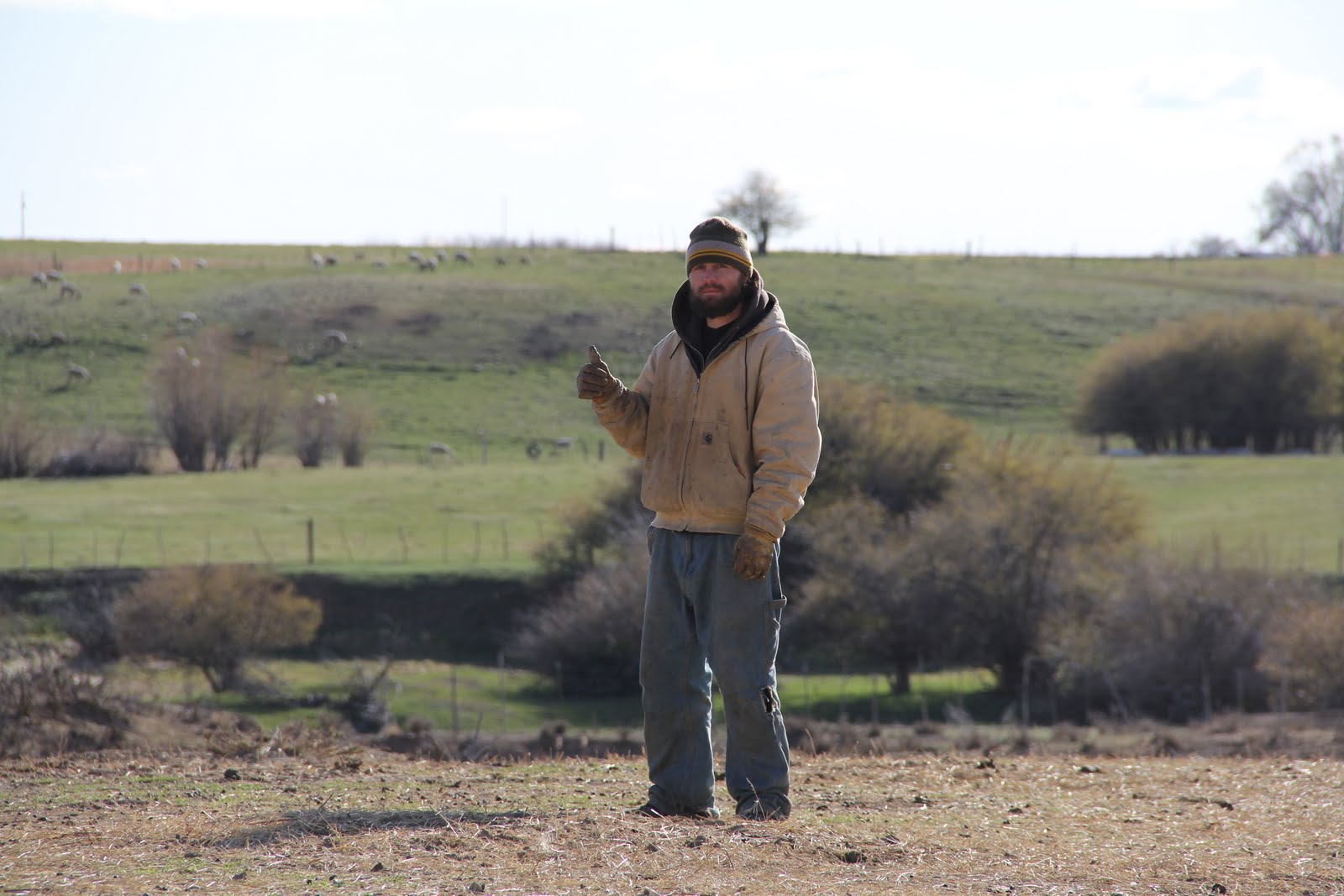
Here is J. He really is excited about lambing time, he's just exhausted these days.
For now, a thumbs up with have to do!
Keep up the hard work hubs! Lambing is almost done.
Since it's shearing week on the ranch I'm going to share with you all you need to know about shearing.
So, what is shearing?
Shearing is a haircut for the sheep except they don't get to choose their style - they all get a buzz cut.
Why do you do it?
Sheep grow wool year round and with warm weather just around the corner shearing helps the sheep stay cool in the summer months. Each sheep produces on average 2 - 30lbs of wool a year and at the time of shearing their fleece weighs on average 7.5lbs. That's a lot of wool to carry around on a hot day!
There are also reasons why we choose to shear our sheep right before lambing season begins. Lambs have an easier time nursing when sheep are shorn. Some sheep ranchers shear before lambing because shorn sheep take up less room in the barn.
What do you do with the wool?
We sell it. We get paychecks two times a year - a few months after shearing from the wool and in September when the lambs are sold.
Does it hurt the sheep?
Absolutely not. I'd imagine they are a little frightened but the team we bring in to shear does a great job. There is an occasional nick, but it's nothing traumatic or too stressful for our sheep.
How many times a year do you shear?
We shear only one time a year. There are some sheep ranchers that shear twice a year.
Who shears?
While anyone could try to shear sheep not everyone does a good job and that is why we pay the professionals. ;) Pop has used the same man every year and J and I don't plan on changing that. Our guy knows what he is doing and he has a good crew that we can trust to do a good job.
What do they shear with?
Shick razors. Totally kidding.
Our guys use electric razors and these have three parts to them - the handpiece, the comb and the cutters.
Electric shears look a little something like this:
Scary looking, right? Again, this is why we leave it to the professionals.
How do you package the wool?
First the wool must be "skirted". I've just learned what this is so bear with me.
Basically the "good" wool must be separated from the "bad" wool. Bad wool tends to include belly wool, off-color, burry and seedy wool and stained or dead wool. We get paid differently on the bad and the good wool.
Where do you send the wool?
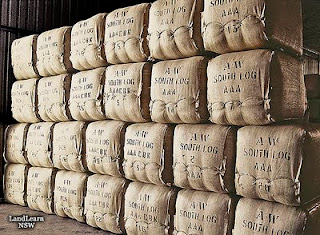
After the wool is separated it's compressed into 400lb bales (like the picture below) and sent off to Roswell Wool.
So that is all you need to know about shearing, but don't go trying this at home!
Today I helped trail the sheep closer to home.
I'll be posting about this soon, but for now here is a picture from the day.
I have lots of things to share this week so stay tuned!
Colorado's
agriculture industry generates approximately $20 billion annually and
provides more than 100,000 jobs and Colorado's lamb industry is the 9th
largest commodity in Colorado. It's no wonder
more and more people are paying attention to the industry and asking
where their food comes from.
We need to keep this trend going as far as I'm concerned.
I love the The American Farm Bureau Foundation's attempt to spread the
word of ag to the younger generation. The AFBF has launched an online
interactive game called My American Farm.
Prior to meeting my husband I honestly thought large ranches were only in the movies since in my hometown all we had were small dairies. Heck! I didn't even know that people could make a
living from raising animals and/or crops until I met my in-laws.
Ask any farmer and rancher and they will all agree the goal in their
community is to educate, educate, educate and what greater way to
educate our younger generations than through the online environment. Although I'm new to the ranching lifestyle I can say confidently that the industry would love to have more young farmers and
ranchers choose to get into the industry so in 40 years the hard work put
in by past and present farmers/ranchers doesn't fade off into the
sunset. That would be a shame.
The online game is a great tool for educators, students, and families.
Even though there are age suggestions for each game I had fun while playing and learned a thing or two!
You can visit and play My American Farmhere.
Have a wonderful week!
Today's Mutton Monday post is about sheep's senses and is pretty basic, but I found some of this stuff to be pretty interesting and I learned a thing or two.
Vision.
While I knew sheep depend heavily on their vision I didn't know they have excellent peripheral vision and can see behind themselves without turning their heads.
Color Perception.
Sheep can also percieve colors. Who would have thought?! I also learned that sheep will be fearful to new colors. This explains why they are always running away from me. Not really, but I will keep that in mind the next time I want to wear a bright pink shirt out.
Smell.
I did know that they have a great sense of smell and use this to find water. Sheep can also distinguish different predators smells which I thought was interesting. It definitely makes sense since they really have no other means of defense (if you don't count the guard dogs).
Hearing.
I also knew that sheep have excellent hearing. The bummers can hear J walking out to feed them in the dark of night the second his feet hit the concrete.
Taste.
Sheep are picky eaters. Plain and simple. J will throw 7 bales of hay and they will go from bale to bale to choose what they think is the best one.
Touch.
Obviously sheep's wool gets in the way when they interact with other sheep. However, bodily contact is important between lambs and their mothers. One way lambs interact with their mothers is through the nuzzling and suckling action. When lambs sleep they will always be close to their mother as well.
Here's two of my favorite photos taken this weekend with our new camera!
President Woodrow Wilson had a flock of sheep that grazed the White House lawn. This was one of his efforts to keep (groundskeeping) costs low during the first World War.
The wool was sold to raise money for the Red Cross during WWI.
Included in the flock was Old Ike, a tobacco-chewing ram.
The Wilson's also observed "meatless and wheatless" days in an attempt to save food for the troops.
This week is National Ag Week and Wednesday, March 16, 2011 has been proclaimed, “Colorado Ag Day.” National Ag Week and Colorado Ag Day are days to recognize ranchers and farmers across America and how important the industry is.
“Colorado's farmers and ranchers contribute greatly to our way of life. Besides providing food and fiber, agriculture also protects our natural resources,” said Commissioner of Agriculture John Salazar. “Colorado's diverse agriculture and food industry is a large part of our great state's economy, generating approximately $20 billion annually and supporting more than 108,000 jobs.”
So, how will you celebrate National Ag Week or Colorado Ag Day? Will you buy local? Will you contact your local National FFA Organization (formerly Future Farmers of America) and see if they are hosting an event? Maybe you will become a follower of an ag blog? Whatever it is you do to honor your local ag industry I speak for thousands when I say your support is greatly appreciated.
What is mutton anyway?
Oh, you thought I made the word up? No, I'm not that clever.
There are three types of meat that come from sheep: lamb, hogget and mutton.
Lamb which most people are familiar with is meat from a sheep in it's first year. This is a more tender meat and very nutritious. Have you tried the Balsamic-Honey Glazed Lam Chops that I mentioned last month in this post yet? I'm telling you...it's delicious.
Hogget is meat from a lamb not old enough to be mutton and with no more than two permanent incisors (or bottom teeth). Clear as mud, right? In simpler terms it's meat from a lamb between one and two years old.
Mutton is the meat from an adult sheep with more than two permanent incisors. This meat can be a bit tougher than lamb and hogget, has stronger flavor and needs to be cooked at longer lengths of time to reduce the toughness.
Mutton busting anyone?
Mutton busting or mutton bustin' is bull ridingfor little kids, on sheep. J did it growing up and said it was one of the funnest things he did. This article on CBSnews.com about Mutton Busting made me laugh out loud and made me a little disappointed that J never won a buckle.
Last but not least...mutton chops.
Who knew mutton chops are Sideburns?!
Portrait of Maj. Gen. Ambrose E. Burnside
If you want to join the ranks of other mutton chopper's here's a How To on growing mutton chops.
I wonder what a mutton bustin' mutton chopper would look like?!