Showing posts with label legislation. Show all posts

Thursday, May 23, 2013

Washington Day 2 and 3: Agvocating.

This is a write up that the Colorado Farm Bureau sent out in a newsletter. It does a great job of summing up the purpose of our trip since, let's be honest...I am totally not going to find the time to write something up on my own.
 
CFB Members Voice Positions in Washington D.C. this Week
On April 22-25, eight Colorado Farm Bureau members, along with Vice President of Public Policy Brent Boydston and Executive Vice President Chad Vorthmann, visited Washington, D.C., to learn about federal policy, meet legislators and visit two embassies. The group met  with AFBF staff to get the latest briefing on bills in front of congress. Then, they met U.S. Trade Representatives to talk about the Trans Pacific Partnership and the importance of trade to Colorado agriculture.  The participants met with Senator Udall to discuss issues and present him with the Friend of Farm Bureau award. After that they had the opportunity to meet with Senator Bennet and talked about immigration reform, and they finished the day at the Embassy of Ireland.

The next morning, they met with the House Judiciary Committee, where they talked about ag labor and the immigration bill. After that, they met with Congressman Polis's staff, where they discussed endangered species and the EPA. Then they met with Congressman Cory Gardner, and finished the day with a meeting at the New Zealand Embassy.

"This trip was very valuable to our members who had the opportunity to discuss policy issues with many of our legislators and review federal legislation that affects their farms and ranches. We had a great experience, learned a lot and most importantly did an outstanding job representing Colorado's farmers and ranchers," said Vorthmann.  

Saturday, April 20, 2013

Fancy clothes.

The last few days I've been trying to figure out the Metro system of Washington, DC and it's definitely proving to be something similar to a very hard math problem. (I hate math.)

Why? Well, this gal is going to our nation's capitol.

Am I excited? Heck yes!

A little nervous? Naturally.

I was one of five people chosen by the Colorado Farm Bureau to attend the annual Washington, DC trip. I feel so grateful for this opportunity but, feel I have this huge responsibility to represent my corner of the state while speaking to our representatives and committees on issues as they relate to the agriculture industry.

I'd say I'm pretty good with public speaking however, when it comes to talking about heavy topics, I get a little flustered, sweaty and really insecure.

A very long time ago, I thought I would work in DC doing something in politics. Big dreams, folks. I am beyond excited to finally visit Washington, DC but I have high (and possibly unreasonable) expectations for myself which is causing a few nerves. I want to do this trip justice - speak my mind, represent my county, run for office. Totally kidding on the last one. Obviously.


www.capitalregionusa.org
I'll take lots of notes, lots of pictures and I'm sure I'll get lost, say something ridiculously stupid in front of our state representative or set off a metal detector and therefore, I'm sure I'll bring back a story or two for you!

Wish me luck! And let me know your Must-Sees of Washington!

Monday, April 8, 2013

Mutton Mondays - From The Ranch Gate to Dinner Plate

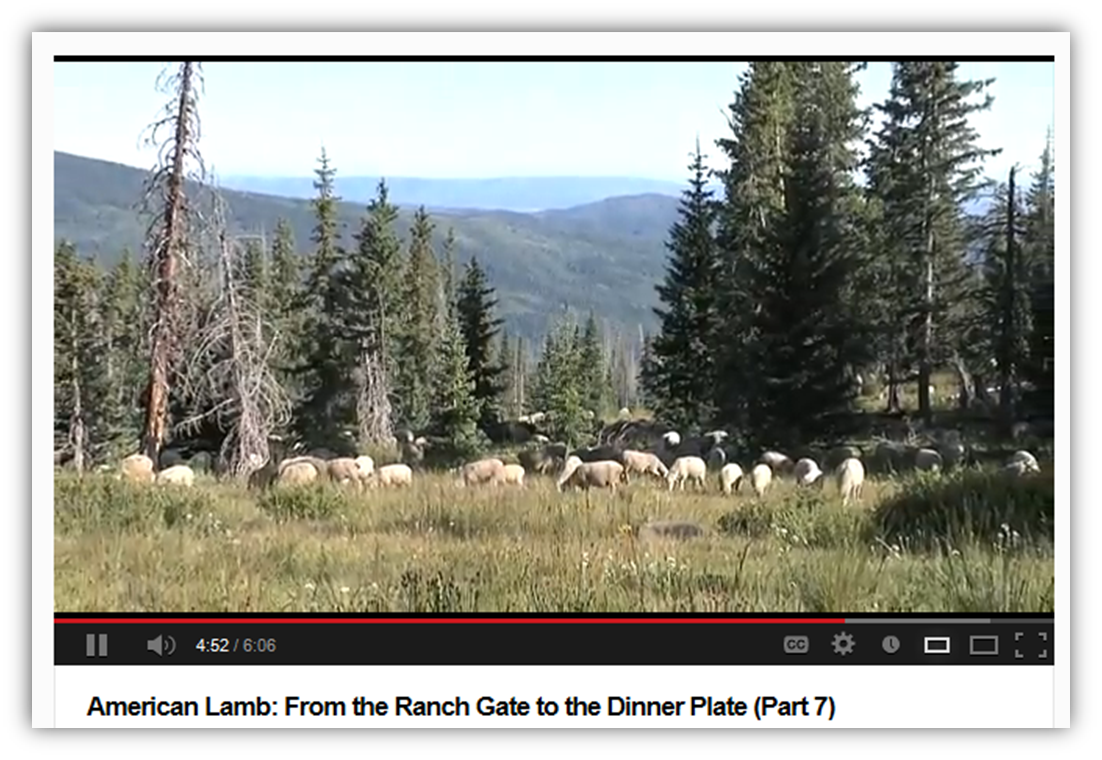
Many people are quite removed from the reality of where their food comes from. This film, From Ranch Gate to Dinner Plate was created by the Colorado Wool Growers and the American Sheep Industry to inform the public of the process that your lamb goes thru before it lands on your plate. From Ranch Gate to Dinner Plate is specific to the Colorado sheep industry however, many of the practices are used throughout the entire meat industry.

My hunky rancher husband filmed this movie. It makes us both quite happy he is able to use his talents and degree while helping the sheep industry. He left his job with Warren Miller Entertainment a few years ago when we decided to move down south to help his Dad with the ranch so when he is able to get the camera out and film, he is quite happy.

The film covers a wide range of topics from how ranch chutes are designed to the actual meat production process and there are a chapters on braising lamb, grilling lamb, barbecuing and roasting lamb. The film covers the humane treatment of sheep, the history of sheep ranching, industry challenges among many other topics.

Here is a link to the Colorado Wool Growers website where they have the movie broken up into chapters. I hope you'll take a few minutes to browse the chapters and learn something about the sheep industry.

I found it interesting that one of the main reasons for the popular dislike of lamb derived from World War II. WWII soldiers were served mutton that was often cooked poorly and therefore these soldiers were turned off by lamb, rightly so. This thinking has been passed down from generation to generation. I understand this is not the case for many people, but I never knew that is where the popular "dislike" of lamb came from. 

My favorite chapter is Chapter 4: Challenges
This chapter discusses the wide array of challenges we face as sheep producers. I feel like ranchers are always getting the short end of the stick. Ever since we've become part of this industry it seems we are constantly on the defensive. Whether someone is trying to kick us off our forest permits, a new law that prohibits our cattle friends from using a certain ranch technique or funding being cut from our Wildlife Services program which will allow more coyotes and bear to kill our ewes and lambs.

The Agriculture Industry is a vital part of our economy and even though you may have never set foot on a ranch, what happens on our ranch ultimately affects you.

If you watch a few minutes of this film you will realize how passionate my fellow sheep ranchers are about their sheep, their ranch and the quality of their product. You also might see a few clips of our ranch and our sheep like this one below! :)

If you would, please take a few minutes to answer these questions. I'm just doing some research for future blog posts and I'd love your input.

What keeps you from eating lamb?
Before watching this film did had you heard about the H-2A Visa Herder Program?
Do you know anything about the Big Horned Sheep conflict?
What did you find most interesting about the film or the clip you watched?
What does Predator Control mean to you?

Thursday, February 28, 2013

The sequester and you.

I used to think that what goes on in the White House doesn't directly impact me...I'm just a middle class citizen and can hide in my little corner of the world. I'll pay my taxes and I'll be left alone.

This frame of mind changed when I became a part of the Ag Community. Everything Washington does directly affects our livelihood. Whether it's new food and safety regulations, wildlife preservation or animal reintroduction or federal budget cuts. 

Needless to say, the upcoming sequester is no exception.

Federal workers will be the first to feel the aftermath of the budget cuts and in an article published by DairyHerd Network earlier this week, it was stated that meat packing plants along with meat processing plants will face short-term shutdowns due to the expected sequester. No USDA inspectors = no meat processing and/or packing. Read about why inspectors are crucial, in this post written by Buzzard's Beat (I am loving her blog right now!)

Of course we won't feel the effects of this immediately so, you'll be able to go to your favorite restaurant in the next few weeks and still order that delicious rack of lamb or juicy hamburger, but it's coming down the pipes. There is no doubt about that.

If the budget isn't figured out before the end of March, the what should have been "temporary" fix may become a more long-lasting one which would mean that meat packing plants won't pack/process meat for an even longer period of time.

How does this affect me in my little corner of Colorado? Without meat packing plants, meat buyers are less likely to make purchases, this means we are less likely to sell our lambs this year, my neighbor won't sell his cattle and your free range chicken won't make it to your table.

I, along with many am hopeful it won't come to this, but you never know.

Obviously, my blog tries to bring information as it relates to the industry, but the article goes on to say that:
"Up to one-third of the USDA's 100,000 employees may be affected by furloughs. The USDA says the cuts would deny food aid to 600,000 pregnant women, new mothers and infants and also force closure of hundreds of Forest Service campgrounds, picnic areas and visitors' centers during the spring and summer."

For the full DailyHerd Article, please click here.
Another great article to give you an idea of the affects this will have, click here.